
Condition guide · Pelvic health
Pelvic Floor Rehabilitation
Urinary leaking is common, rarely discussed, and treatable. Pelvic floor muscle training carries some of the strongest evidence of any intervention in this library — and most people who could benefit never hear about it.
In plain words. The pelvic floor is a sling of muscle running from the pubic bone to the base of the spine. It supports the bladder, bowel and uterus, and it has to close the urethra firmly at exactly the moment your abdominal pressure spikes — when you cough, sneeze, laugh, lift or jump.
When that closure is not strong or well-timed enough, urine leaks. That is stress urinary incontinence, and it is the type with the strongest evidence for treatment. A different pattern — a sudden overwhelming urge with leaking on the way to the toilet — is urgency incontinence, and many people have a mixture of both.
These muscles can be trained, like any others. The evidence that this works is unusually good.
Key points
- Women with stress incontinence doing pelvic floor muscle training were eight times more likely to report cure than those given no treatment — 56% versus 6% (RR 8.38, 95% CI 3.68 to 19.07). [1]
- That finding is rated high-quality evidence — rare in rehabilitation research. [1]
- Cure or improvement reached 74% versus 11% for stress incontinence (RR 6.33, 95% CI 3.88 to 10.33). [1]
- For any type of urinary incontinence, cure was 35% versus 6% (RR 5.34, 95% CI 2.78 to 10.26). [1]
- Incontinence-specific quality of life improved as well as the symptoms themselves. [1]
- The evidence is much thinner for urgency incontinence alone and for mixed incontinence — only one study each, with no data on cure. [1]
What is actually happening
Continence depends on the pressure closing the urethra staying higher than the pressure pushing urine out. The pelvic floor muscles contribute to that closure directly, and they also need to contract fast enough — before or at the same instant as the cough, not after it.
Pregnancy and childbirth stretch and can damage these muscles and the nerves supplying them. Menopause, chronic coughing, constipation and straining, repeated heavy lifting, and simply ageing all add to the load. The result is not usually a single dramatic injury but a gradual loss of strength, endurance or timing.
Training addresses all three of those: strength, endurance and coordination. That is why a properly prescribed programme is more than "do some squeezes" — the number, the hold time, the rest, the position and the progression all matter, and a review specifically comparing different approaches to training has been published for exactly that reason. [2]
What it feels like
- Stress incontinence: leaking with coughing, sneezing, laughing, lifting, jumping or exercise.
- Urgency incontinence: a sudden compelling need to pass urine, with leaking before reaching the toilet.
- Mixed: both patterns together, which is common.
- Needing to know where the toilets are, planning routes around them, or restricting fluid to manage the problem.
- Avoiding exercise, laughing or lifting because of what might happen.
- A sense of heaviness or dragging in the pelvis, which can indicate prolapse and should be assessed.
How it is diagnosed
By history first — the pattern of leaking is what distinguishes stress from urgency incontinence, and that distinction drives treatment. A bladder diary recording fluid intake, voiding and leaking episodes is often used. Assessment of the pelvic floor muscles themselves establishes whether the person can contract them correctly, how strong the contraction is, and how long it can be held.
That last point matters more than it sounds. A substantial proportion of people given a leaflet about pelvic floor exercises do not perform the contraction correctly, and some bear down instead — which is the opposite of what is intended. Confirming the contraction is a genuine reason to see a clinician rather than self-treat.
How physiotherapy and rehabilitation help
Pelvic floor muscle training is the treatment, and the evidence for it in stress incontinence is as good as anything on this site: 56% of women reported cure against 6% with no treatment, on high-quality evidence. [1] The programme builds strength and endurance in the muscles, and trains them to activate at the right moment during the activities that provoke leaking.
Around it sits practical work: bladder habits, fluid and caffeine, management of constipation and chronic coughing, and technique for lifting — all of which affect the load these muscles have to handle.
What a programme involves
| Component | What it is for | Evidence |
|---|---|---|
| Supervised pelvic floor muscle training | Building the strength, endurance and timing of the muscles that close the urethra. | Strongly supported Cure 56% vs 6% for stress incontinence; high-quality evidence [1] |
| Confirming the contraction is correct | Making sure the right muscles are working and the person is not bearing down instead. | Standard practice Underpins any effective programme; a reason not to self-treat from a leaflet |
| Progression of the programme repetitions, hold time, position, function |
Advancing from basic contractions to holding under load and during the activities that cause leaking. | Approach comparison reviewed separately A dedicated review compares different training approaches [2] |
| Bladder and lifestyle advice | Fluid and caffeine habits, managing constipation and chronic cough, lifting technique — the loads the pelvic floor must handle. | Not separately tested here Standard practice; not isolated in the cited review |
| Treatment for urgency incontinence alone | Managing the sudden-urge pattern rather than the stress pattern. | Evidence very limited Only one study with urgency incontinence alone, with no data on cure [1] |
| Electrical stimulation, biofeedback, vaginal cones | Adjuncts sometimes used alongside training. | Not tested here Not evaluated in the cited review; this page makes no claim either way |
What a course of treatment looks like
Assessment first, including confirming the type of incontinence and that the contraction is being performed correctly. Then a prescribed programme performed daily at home, with periodic review to progress it and check technique. The trials in the review varied considerably in the content and duration of the programme, which is part of why a separate review exists comparing different approaches. [1][2]
Improvement is typically measured over weeks to a few months, and, as with any muscle training, the gains depend on continuing. This is a treatment that requires the person to do the work, which is precisely why teaching it properly at the start matters so much.
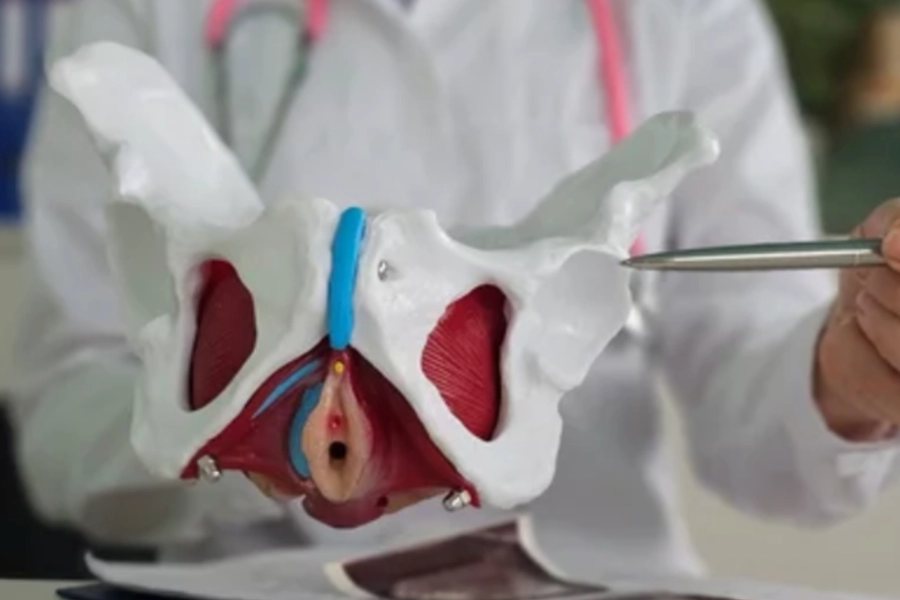
Assessment matters because a large proportion of people cannot contract these muscles correctly from a verbal instruction alone — which is the main reason supervised training outperforms a leaflet.
What the evidence supports — and what it does not
Pelvic floor muscle training versus no treatment, stress incontinence
Supported
- Pelvic floor muscle training for stress incontinence — eight times more likely to report cure than no treatment (56% vs 6%, RR 8.38, 95% CI 3.68 to 19.07), on high-quality evidence. [1]
- Cure or improvement — 74% versus 11% (RR 6.33, 95% CI 3.88 to 10.33). [1]
- Training for any type of urinary incontinence — cure 35% versus 6% (RR 5.34, 95% CI 2.78 to 10.26). [1]
- Improvement in incontinence-specific symptoms and quality of life, not only leak counts. [1]
Not supported
- Confident claims about urgency incontinence alone — only one study included women with urgency incontinence alone, with no data on cure. [1]
- Confident claims about mixed incontinence — likewise only one study, with no cure data. [1]
- Claiming a particular training protocol is best — the content and duration of programmes varied considerably across trials, which is why a separate review examines that question. [1][2]
- Assuming a leaflet is enough — the evidence is for trained programmes, not for unsupervised guesswork at the contraction.
What the most recent evidence adds
Training during pregnancy prevents problems, not just treats them. A 2024 systematic review and meta-analysis of 30 randomised trials and 6691 women found pelvic floor muscle training during pregnancy reduced the risk of urinary incontinence (RR 0.72, 95% CI 0.59 to 0.87) and of third- or fourth-degree perineal tear (RR 0.50, 95% CI 0.31 to 0.80). It did not reduce episiotomy (RR 0.95, 95% CI 0.85 to 1.07). [3] The authors argue for building this into routine antenatal care. Two of those three outcomes are prevention of things women are usually told to hope they avoid.
Feedback on whether you are doing it right adds measurable benefit. A multicentre randomised trial of 452 women after childbirth compared pressure-mediated biofeedback with pelvic floor muscle training against training in the control group. The biofeedback group had a greater reduction in incontinence severity, a higher cure rate (20.2% versus 8.7%) and higher improvement rate (59.2% versus 44.5%), along with greater pelvic floor muscle strength. [4] This is the practical argument for being taught and checked rather than handed an instruction sheet — the exercise is easy to do wrongly and impossible to see yourself doing.
Quality of life improves, most clearly in stress incontinence. A 2023 systematic review and meta-analysis found pelvic floor muscle training improved quality of life in women with urinary incontinence, with benefits extending to social activities and general health, and the clearest effects in stress urinary incontinence. [5] The overall effect across controlled studies was small; the domains it touches are ones that shape whether someone leaves the house.
The pelvic floor works as part of the trunk, alongside the deep abdominal and back muscles, so these problems and low back pain often appear together and are worth assessing together.
How certain is this?
Evidence grade: Moderate to high. The headline result — cure of stress incontinence — is rated high-quality evidence by the reviewers, which is uncommon in rehabilitation and worth taking seriously. [1]
The limits are real and worth naming. The trials were small to moderate in size, follow-up was generally under twelve months, and many were at moderate risk of bias. The cure estimate rests on 4 trials and 165 women, and its confidence interval is very wide (3.68 to 19.07) — the direction is unambiguous, the precise magnitude is not. There was considerable variation in what the programmes contained. And the evidence covers women; this review does not address men, for whom the situation after prostate surgery is a different question. [1]
What to expect
Improvement over weeks to a few months of consistent daily training, with the best results where the contraction has been checked and the programme progressed properly. Follow-up in most trials was under twelve months, so the very long-term picture is less well established. [1]
As with any muscle training, benefits depend on continuing. Many people move to a reduced maintenance programme once symptoms have settled rather than stopping altogether.
Seek medical assessment rather than starting exercises
See a doctor promptly if you have:
- Blood in the urine.
- Pain or burning on passing urine, fever, or loin pain — this suggests infection.
- Difficulty passing urine, a poor stream, or a feeling of incomplete emptying.
- A bulge or heaviness you can feel at the vaginal opening — prolapse needs assessment.
- New incontinence with numbness around the back passage, genitals or inner thighs, or with leg weakness — this needs emergency assessment.
- Sudden onset of incontinence, or incontinence with unexplained weight loss.
- Faecal incontinence, which is treatable but needs specific assessment.
This list is not exhaustive. Incontinence is common but should be assessed rather than assumed.
Common questions
Do pelvic floor exercises really work?
For stress incontinence in women, yes, and the evidence is unusually strong: 56% reported cure with training against 6% with no treatment — an eightfold difference, rated high-quality evidence. [1] It is one of the best-supported interventions described anywhere on this site.
Can I just do them myself from an internet video?
You can try, but a substantial proportion of people do not perform the contraction correctly without being taught, and some bear down instead — which works against the goal. The trials studied prescribed, progressed programmes rather than unsupervised guesswork. Having the contraction confirmed is the main practical argument for an assessment.
I leak when I get a sudden urge, not when I cough. Does this apply?
Less clearly. The strong evidence here is for stress incontinence — leaking on effort. Only one study in the review included women with urgency incontinence alone, and it provided no data on cure. [1] Urgency and mixed patterns need assessment, because the management differs.
Is this only for women who have given birth?
No. Pregnancy and childbirth are important contributors, but chronic coughing, constipation and straining, repeated heavy lifting, menopause and ageing all load the same system. The cited review covers women generally, not only those who have given birth. [1]
How long before I notice a difference?
Typically weeks to a few months of consistent daily training. Follow-up in most trials was under twelve months. [1] As with other muscle training, the benefit depends on keeping it up, usually at a reduced maintenance level once symptoms have settled.
References
- Dumoulin C, Cacciari LP, Hay-Smith EJC. Pelvic floor muscle training versus no treatment, or inactive control treatments, for urinary incontinence in women. Cochrane Database of Systematic Reviews. 2018 Oct 4;10(10):CD005654. doi:10.1002/14651858.CD005654.pub4 PMID 30288727 Systematic review
- Hay-Smith EJC, Starzec-Proserpio M, Moller B, et al. Comparisons of approaches to pelvic floor muscle training for urinary incontinence in women. Cochrane Database of Systematic Reviews. 2024 Dec 20;12(12):CD009508. doi:10.1002/14651858.CD009508.pub2 PMID 39704322 Systematic review
- Zhang D, Bo K, Montejo R, et al. Influence of pelvic floor muscle training alone or as part of a general physical activity program during pregnancy on urinary incontinence, episiotomy and third- or fourth-degree perineal tear: Systematic review and meta-analysis of randomized clinical trials. Acta Obstetricia et Gynecologica Scandinavica. 2024 Jun;103(6):1015–1027. doi:10.1111/aogs.14744 PMID 38140841 Systematic review and meta-analysis
- Wang X, Qiu J, Li D, et al. Pressure-Mediated Biofeedback With Pelvic Floor Muscle Training for Urinary Incontinence: A Randomized Clinical Trial. JAMA Network Open. 2024 Nov 4;7(11):e2442925. doi:10.1001/jamanetworkopen.2024.42925 PMID 39499517 Randomised controlled trial
- Curillo-Aguirre CA, Gea-Izquierdo E. Effectiveness of Pelvic Floor Muscle Training on Quality of Life in Women with Urinary Incontinence: A Systematic Review and Meta-Analysis. Medicina. 2023 May 23;59(6):. doi:10.3390/medicina59061004 PMID 37374208 Systematic review and meta-analysis
About this guide
If you need assessment
This page explains. It does not diagnose.
The type of incontinence determines the treatment, and whether the pelvic floor contraction is being performed correctly can only be established by assessment. Both matter more here than in almost any other condition on this site. Physiotherapist India publishes information and takes no bookings. Ask a qualified physiotherapist to examine your own case before acting on anything written here.