
Condition guide · Hip and lower limb
Hip Osteoarthritis
Exercise matches anti-inflammatory tablets for pain relief, without their risks. And in severe hip arthritis, hip replacement clearly beats exercise. Both statements are true, and the useful question is which one applies to you.
In plain words. The hip is a deep ball-and-socket joint carrying most of your body weight. In osteoarthritis its cartilage thins, the bone underneath changes, and the joint becomes painful and stiff — usually felt in the groin, often referred to the thigh or knee.
The honest summary is that this page has two answers rather than one. For most people, exercise is genuinely effective and as good as the tablets usually offered alongside it. For people with severe arthritis who already meet the criteria for surgery, a hip replacement does substantially more.
Key points
- Exercise works about as well as anti-inflammatory tablets. Across 152 trials and 17,431 participants, there was no difference between exercise and oral NSAIDs or paracetamol for pain or function at 4, 8 or 24 weeks. [3]
- Given the safety difference, that is a strong argument for exercise — the reviewers say it should be given more prominence, particularly in older people at risk of drug side effects. [3]
- Resistance exercise over 3 to 6 months improves pain and function at moderate benefit, pooled from 280 studies. [4]
- The dose matters less than expected. Effect size showed no association with total exercise volume, and none with adherence — so rigid adherence to a specific prescription may not be necessary. [4]
- For severe hip arthritis with a surgical indication, replacement is clearly better. Oxford Hip Score improved 15.9 points after surgery against 4.5 with resistance training, a difference of 11.4 points (95% CI 8.9 to 14.0). [1]
- Manual therapy adds little. High-certainty evidence of no added benefit over exercise alone in the long term. [5]
- The guideline puts exercise, education and weight management at the core of non-drug management for hip and knee osteoarthritis. [2]
What is actually happening
Cartilage covering the ball of the femur and the socket of the pelvis becomes thinner and less able to distribute load. The bone underneath thickens, small bony growths form at the joint margins, and the capsule around the joint stiffens. The joint becomes both painful and mechanically restricted, particularly in rotation.
Two things are worth correcting early. First, this is not simply "wear and tear" from use — exercise does not wear the joint out, and inactivity is associated with worse outcomes rather than better ones. Second, the state of the cartilage on a scan corresponds poorly with how much pain someone has. People with marked radiographic change can be comfortable, and people with modest change can be very symptomatic.
What tends to drive the disability is the combination of pain, loss of hip rotation, and weakness in the muscles around the hip — and those last two are the parts rehabilitation can change.
What it feels like
- Pain in the groin, often deep, sometimes spreading to the front of the thigh or as far as the knee. Knee pain from a hip is commonly missed.
- Stiffness after sitting or first thing in the morning, usually easing within about half an hour.
- Difficulty with socks, shoes and getting in and out of a car — movements that need hip rotation.
- A limp, or needing the arms to rise from a low chair.
- Night pain in more advanced disease, and pain that persists at rest.
Pain felt on the outer side of the hip, tender to press on, is more often a tendon or bursa problem than the joint itself — a different condition with a different treatment.
How it is diagnosed
Clinically, from the pattern of symptoms and the examination — particularly restriction of hip rotation, which is characteristic. X-rays can confirm the changes but correlate poorly with symptoms, so imaging is used to answer specific questions, such as when surgery is being considered, rather than to decide whether someone has a problem worth treating.
A physiotherapy assessment measures what the joint can do: range of movement, strength around the hip, how you walk and rise, what you have stopped doing, and what you want to get back to. That is what a programme is built from.
How physiotherapy and rehabilitation help
Exercise does not regrow cartilage. It improves the strength and control of the muscles around the joint and the tolerance of the whole limb to load, so the same hip does more with less pain. The guideline for non-pharmacological management of hip and knee osteoarthritis places an individualised management plan, education and self-management, and appropriately dosed and progressed exercise at the core, with weight management, footwear and walking aids, work advice and behaviour change techniques around them. [2]
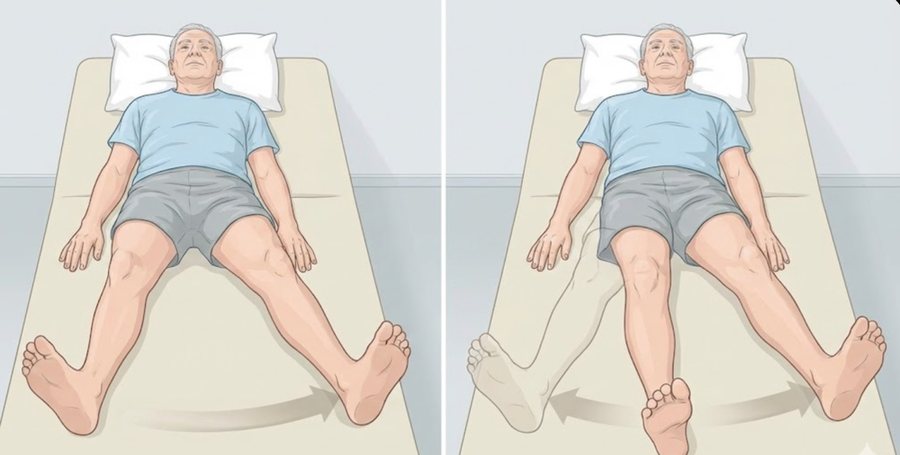
Strengthening the muscles around the hip is the core of the programme. Reassuringly, the effect did not depend on total exercise volume or on how strictly people adhered — so a manageable programme done imperfectly is still worth doing. [4]
How well does it actually work?
Better than most people expect, and the most useful comparison is against the drugs normally offered. A network meta-analysis of 152 randomised trials and 17,431 participants found no difference between exercise therapy and oral NSAIDs or paracetamol for pain relief at 4 weeks (SMD -0.12), 8 weeks (0.22) or 24 weeks (0.17), and no difference in functional improvement at any of those points. [3]
The authors draw the obvious conclusion: since exercise has an excellent safety profile and the drugs do not, exercise deserves more prominence in care — especially in older people with other conditions or at higher risk of drug-related harm. [3] That argument carries particular weight where long-term NSAID use is common.
On the exercise itself, a pooled analysis of 280 studies found moderate benefit for pain and for physical function from resistance exercise programmes of 3 to 6 months. [4] Two findings from that analysis are unusually practical. There was no association between total exercise volume — frequency, time, duration — and the size of the effect. And there was no association between adherence and the effect either. The authors conclude that improvement does not appear to require rigid adherence to a specific dose. [4]
That is worth stating plainly to anyone who has abandoned a programme for missing sessions: on this evidence, an imperfectly followed programme still works.
What a programme involves
| Component | What it is for | Evidence |
|---|---|---|
| Progressive strengthening around the hip the core of the programme, over three to six months |
Building the strength and control of the muscles that carry and steady the joint, so the same hip does more with less pain. | Supported Moderate benefit for pain and function, pooled from 280 studies [4] |
| Exercise in place of, or alongside, tablets | Achieving the same pain relief as the medication usually offered, without the drug risk. | Supported No difference from oral NSAIDs or paracetamol at 4, 8 or 24 weeks across 152 trials and 17,431 participants [3] |
| Education and self-management | Understanding what the condition is, what makes it flare, and how to keep the programme going without supervision. | Supported A named core component of the guideline, not an optional extra [2] |
| Weight management, footwear, walking aids and work advice | Reducing the load the joint carries and keeping you at work and mobile while the strength work takes effect. | Supported Core components in the guideline for hip and knee osteoarthritis [2] |
| Range of movement work particularly rotation, usually the first movement lost |
Recovering the turning range needed for socks, shoes and getting out of a car. | Not separately tested Standard practice; not isolated from the strengthening programmes in the cited reviews |
| Manual therapy added to exercise | Short-term relief of pain and stiffness on top of the exercise programme. | Not supported long term High-certainty evidence of no added benefit over exercise alone in the long term; very low to moderate certainty of short-term help [5] |
| Electrotherapy ultrasound, TENS, shockwave, laser |
Commonly offered for joint pain. | Not tested here None of the sources cited on this page evaluated them, so this page makes no claim either way |
An amber badge means the sources cited on this page did not test that component — not that it fails. It is a statement about the evidence available here, not a verdict.
What a course of treatment looks like
Assessment first: what the hip can actually do — rotation range, strength, how you walk and rise from a chair — and what you have stopped doing that you want back. The programme is built from that, not from the x-ray.
Then a progressive strengthening programme, reviewed and made harder as you tolerate it. The trial evidence runs over three to six months, and that is the honest timescale to plan for. [4] Appointments are for checking technique and increasing the load, not for lying on a couch receiving treatment — most of the work happens between them.
Two findings should take the pressure off. The size of the benefit showed no association with total exercise volume, and none with how closely people stuck to the programme. [4] A manageable programme done imperfectly still works. What does matter is that it continues: the benefit follows the training rather than persisting once it stops.
When replacement is the better answer
This page would be dishonest if it left this out. A 2024 randomised trial enrolled 109 people aged 50 or over with severe hip osteoarthritis who already had an indication for surgery, and assigned them to either total hip replacement or a supervised resistance training programme. At six months the Oxford Hip Score had improved by 15.9 points after surgery against 4.5 points with resistance training — a difference of 11.4 points (95% CI 8.9 to 14.0), which is clinically important as well as statistically clear. [1]
The crossover figures show how the two groups experienced their allocation: 9% of those assigned surgery had not had it by six months, while 21% of those assigned resistance training had gone on to have a hip replacement. [1] Serious adverse events were similar between groups, and most were known complications of the surgery. [1]
Read the entry criteria carefully, because they define who this applies to: severe osteoarthritis, aged 50 or over, and already considered a surgical candidate. That is not the same population as someone with early or moderate hip arthritis wondering whether to start exercising. For that larger group, the exercise-versus-drugs evidence is the relevant comparison. [3]
This site has published several pages where surgery failed to beat non-surgical care or placebo. It would be selective to report those and omit this one. Where the evidence favours the operation, it favours the operation.
What the evidence supports — and what it does not
Supported
- Exercise as first-line care, equivalent to NSAIDs and paracetamol for pain and function, with a far better safety profile. [3]
- Resistance exercise over 3 to 6 months for pain and physical function. [4]
- Education, self-management and weight management as core components rather than extras. [2]
- Total hip replacement in severe disease with a surgical indication — a clinically important advantage over resistance training at six months. [1]
Not supported
- Manual therapy as a long-term addition — high-certainty evidence of no added benefit over exercise alone. [5]
- Insisting on a precise exercise dose. Effect size showed no association with exercise volume. [4]
- Treating missed sessions as failure. No association between adherence and effect size. [4]
- Extending the surgical result to everyone. The trial recruited people with severe disease who already met surgical criteria. [1]
- Using x-ray severity to decide who needs treatment. Imaging findings correspond poorly with symptoms.
How certain is this?
Evidence grade: Moderate to high.
The exercise-versus-drugs comparison rests on 152 randomised trials and more than 17,000 participants, which is a substantial base, though several of its time points are informed by very few trials — the 8-week comparisons draw on two trials only, and the credibility intervals at 4 and 24 weeks are wide. [3] The finding of equivalence is more secure than any precise estimate of it.
The resistance exercise analysis pooled 280 studies and reports moderate benefit; its null findings on dose and adherence come from smaller subsets — 151 studies with volume data and 74 with usable adherence data, of which only five were hip studies. [4] The dose and adherence conclusions should therefore be read as encouraging rather than settled, and they are more securely established for the knee than for the hip.
The surgical trial is the most precise result here but also the narrowest: 109 patients, six-month follow-up, one country, and a population selected for having a surgical indication. [1] It answers its question well and does not answer a broader one.
The manual therapy conclusion is the firmest negative on the page — the reviewers rate the absence of long-term added benefit as high certainty. [5]
What to expect
Improvement over months, judged by what you can do rather than by how the hip feels on any given day. Osteoarthritis fluctuates, and a bad week is not evidence that a programme has failed.
Expect the first gains in strength and confidence rather than in range of movement, which usually improves last if it improves at all. Expect to keep some form of exercise going: the benefit follows the training rather than persisting after it.
If pain is severe, present at rest and at night, and function is deteriorating despite a proper programme, that is the point to discuss surgery rather than to persist. On the trial evidence, people in that position do substantially better with a replacement. [1]
Common questions
Will exercise wear my hip out faster?
No. That worry is understandable given the phrase "wear and tear", but the evidence runs the other way: appropriately dosed exercise improves pain and function, [4] and inactivity leads to weakness that makes the joint harder to use. Exercise is the treatment, not the risk.
Should I take painkillers or exercise?
On pain and function they performed equivalently across 152 trials. [3] The difference is in safety: exercise has an excellent safety profile and NSAIDs do not, particularly in older people or those with other conditions. That is exactly why the reviewers argue exercise should be more prominent. [3] Medication decisions belong with your doctor, and the two are not mutually exclusive.
I keep missing sessions. Am I wasting my time?
Probably not. The pooled analysis found no association between adherence and the size of the benefit, and none between total exercise volume and benefit either — leading the authors to conclude that improvement does not require rigid adherence to a specific dose. [4] Doing something regularly beats doing the perfect programme briefly.
Do I need a hip replacement?
That depends on severity. In people with severe hip osteoarthritis who already met the criteria for surgery, replacement improved the Oxford Hip Score by 11.4 points more than resistance training at six months — a clinically important difference. [1] If your arthritis is not at that stage, the relevant comparison is exercise against medication, where exercise performs equally well. [3] The decision belongs with an orthopaedic surgeon, informed by how much the hip is limiting your life.
Is manual therapy worth adding?
Possibly briefly, not indefinitely. There was very low to moderate certainty that adding manual therapy to exercise helped pain in the short term, but high-certainty evidence of no added benefit for pain or function in the long term. [5] It is a reasonable adjunct early on and a poor reason for an extended course of treatment.
My pain is in my knee. Could it still be my hip?
Yes, and this is commonly missed. Hip osteoarthritis frequently refers pain to the front of the thigh and the knee, sometimes with no groin pain at all. If knee examination is unremarkable but hip rotation is restricted and painful, the hip is the likely source. Compare knee osteoarthritis, which shares much of the same management.
References
- Frydendal T, Christensen R, Mechlenburg I, et al. Total Hip Replacement or Resistance Training for Severe Hip Osteoarthritis. New England Journal of Medicine. 2024 Oct 31;391(17):1610–1620. doi:10.1056/NEJMoa2400141 PMID 39476341 Randomised controlled trial
- Moseng T, Vliet Vlieland TPM, Battista S, et al. EULAR recommendations for the non-pharmacological core management of hip and knee osteoarthritis: 2023 update. Annals of the Rheumatic Diseases. 2024 May 15;83(6):730–740. doi:10.1136/ard-2023-225041 PMID 38212040 Clinical practice guideline
- Weng Q, Goh SL, Wu J, et al. Comparative efficacy of exercise therapy and oral non-steroidal anti-inflammatory drugs and paracetamol for knee or hip osteoarthritis: a network meta-analysis of randomised controlled trials. British Journal of Sports Medicine. 2023 Aug;57(15):990–996. doi:10.1136/bjsports-2022-105898 PMID 36593092 Systematic review and network meta-analysis
- Marriott KA, Hall M, Maciukiewicz JM, et al. Are the Effects of Resistance Exercise on Pain and Function in Knee and Hip Osteoarthritis Dependent on Exercise Volume, Duration, and Adherence? A Systematic Review and Meta-Analysis. Arthritis Care & Research. 2024 Jun;76(6):821–830. doi:10.1002/acr.25313 PMID 38317328 Systematic review and meta-analysis
- Runge N, Aina A, May S. The Benefits of Adding Manual Therapy to Exercise Therapy for Improving Pain and Function in Patients With Knee or Hip Osteoarthritis: A Systematic Review With Meta-analysis. Journal of Orthopaedic & Sports Physical Therapy. 2022 Oct;52(10):675–A13. doi:10.2519/jospt.2022.11062 PMID 35881705 Systematic review and meta-analysis
About this guide
If you need assessment
This page explains. It does not diagnose.
Groin or thigh pain has several causes, and hip osteoarthritis is diagnosed clinically rather than from a scan alone. Decisions about joint replacement belong with an orthopaedic surgeon. Physiotherapist India publishes information and takes no bookings. Ask a qualified physiotherapist to examine your own case before acting on anything written here.