Condition guide · Neurological
Guillain-Barré Syndrome
A rapid, immune-mediated paralysis from which most people recover — but not all, and not completely. Rehabilitation is where the long tail of the illness is dealt with, and it is the part of the pathway with the thinnest evidence behind it.
In plain words. Guillain-Barré syndrome is a rare condition in which the immune system, usually after an infection, attacks the peripheral nerves — the wiring that runs from the spinal cord out to the muscles and skin. Weakness spreads over days, typically starting in the legs, and in the most severe cases can reach the muscles used for breathing.
It is a medical emergency at the start and a rehabilitation problem afterwards. The acute treatment is immunotherapy given in hospital. What happens over the following months and years — strength, walking, and above all fatigue — is largely the work of rehabilitation.
New, rapidly spreading weakness is an emergency
Go to hospital now, do not wait for a physiotherapy appointment, if:
- Weakness or numbness is spreading over hours or days, especially upwards from the legs.
- You are short of breath, cannot complete a sentence, or cannot lie flat.
- Swallowing has become difficult, or your voice has changed.
- You are unsteady on your feet in a way that is new.
Immunotherapy works best when given early: the guideline recommends it within two weeks of the onset of weakness for people unable to walk unaided. [1] This page is written for people who are past that stage.
Key points
- Acute treatment is immunoglobulin or plasma exchange, given in hospital and started early. [1]
- Corticosteroids are recommended against. The guideline recommends against oral corticosteroids and weakly against intravenous ones. [1]
- Recovery is usually good but often incomplete. About 20% of treated patients are unable to walk at six months, and about 5% die. [2]
- The guideline does not recommend any specific treatment for fatigue — which is the symptom most survivors are still dealing with a year later. [1]
- Supervised, individualised exercise beat an unsupervised home programme in a randomised trial conducted in India, on strength, fatigue and quality of life. [4]
- Multicomponent programmes are what the evidence supports — resistance, aerobic, balance and respiratory work together. [5]
- The rehabilitation evidence base is very small. Thirteen articles and 173 participants in the most recent systematic review. [5]
- Access is the real problem in much of the world, including insufficient access to immunotherapy in low-income countries. [3]
What is actually happening
In most cases an infection comes first — commonly a diarrhoeal illness or an upper respiratory tract infection. The immune system produces antibodies against the organism, and in some people those antibodies also recognise structures on the surface of peripheral nerves. This resemblance between microbe and nerve is called molecular mimicry, and it is best established for Campylobacter jejuni. [2]
The result is an attack on the nerve, either on its insulating myelin sheath or on the nerve fibre itself. Signals from spinal cord to muscle slow down or stop. Weakness typically begins in the legs and ascends; sensory disturbance, pain, and involvement of the cranial nerves and the autonomic nervous system are all common. [1]
It is usually a single-episode illness rather than a relapsing one. [2] The nerve then repairs, which takes months, and this is the crucial fact for rehabilitation: the timescale is set by biology, not by effort. If progression continues beyond eight weeks from onset, the diagnosis should be reconsidered — that happens in around 5% of patients initially diagnosed with the syndrome. [1]
What it feels like
- Weakness that spreads over days, usually starting in the legs and moving upwards.
- Tingling and numbness, often in the hands and feet before the weakness.
- Pain — deep, aching, in the back and limbs; often underestimated and undertreated.
- Loss of reflexes.
- Facial weakness, double vision, or difficulty swallowing where the cranial nerves are involved.
- Breathlessness where the respiratory muscles are affected.
- Blood pressure and heart rate instability from autonomic involvement. [1]
Later, and for much longer, fatigue — disproportionate, not relieved by rest, and the symptom most likely to still be limiting a year on.
How it is diagnosed
Clinically, supported by tests. The guideline's good practice points are direct: the diagnosis is more likely if there is a history of recent diarrhoea or respiratory infection; examination of the cerebrospinal fluid is valuable, particularly where the diagnosis is less certain; and electrodiagnostic testing is advised to support the diagnosis. Testing for anti-ganglioside antibodies is of limited clinical value in most patients with typical motor-sensory disease, though anti-GQ1b testing should be considered when Miller Fisher syndrome is suspected. [1]
Two prognostic scores are recommended and are worth knowing by name, because they shape what happens next: the modified Erasmus GBS outcome score (mEGOS) to assess outcome, and the modified Erasmus GBS Respiratory Insufficiency Score (mEGRIS) to assess the risk of needing ventilation. [1]
How physiotherapy and rehabilitation help
The role changes completely across the course of the illness, and it is worth separating the phases.
In hospital
Here rehabilitation is supportive and protective rather than restorative: maintaining joint range, positioning, respiratory care, and preventing the complications of immobility. The disease is still progressing, and nothing a physiotherapist does will change its course. The medical treatments that do — intravenous immunoglobulin at 0.4 g/kg for five days, or plasma exchange — are the guideline's recommendations. [1]
Afterwards — the trial worth knowing about
The most directly relevant piece of evidence for people in the chronic phase was conducted in India and published in the Journal of Physiotherapy. Sixteen adults with stable residual disability at least six months after onset were randomised to either 60-minute physiotherapist-supervised sessions — strengthening, endurance and breathing exercises, gait training and pain management, two to three times a week for 12 weeks — or to a prescribed home programme of 30-minute maintenance exercises and self-management education at the same frequency. [4]
At six months the supervised group did better on strength (median between-group difference 8 points, 95% CI 4 to 18, on the 60-point Medical Research Council scale), on fatigue (-13, 95% CI -28 to -1, on the Fatigue Severity Scale as scored in that trial), and on the environment domain of quality of life (12, 95% CI 3 to 13). On the primary outcome, functional independence on the 100-point Barthel Index, the difference was 5 points with a confidence interval from 0 to 20 — which includes no difference. Estimated effects at 12 months were of similar magnitude but with greater uncertainty. [4]
Read that carefully. The trial's own title reports what it found: supervised, individualised exercise reduced fatigue and improved strength and quality of life more than unsupervised home exercise. It did not demonstrate a clear advantage on its primary outcome, and it had 16 participants. It is the best trial in this area, and it is still a small one.
What the reviews add
A 2026 systematic review examined exercise programmes in Guillain-Barré syndrome and chronic inflammatory demyelinating polyradiculoneuropathy. It found 13 articles covering 173 participants — including case studies, randomised and non-randomised trials, a prospective study, case series and a replicated single-case design. Its synthesis: multicomponent programmes integrating resistance, aerobic, balance and respiratory exercise are associated with improvements in fatigue and functional capacity, with the best results linked to supervised and individualised sessions of 45 to 60 minutes, three to four times a week, for at least 12 weeks. The authors note explicitly that these findings were drawn from heterogeneous study designs. [5]
A scoping review screening 1,021 papers and including 16 reached a compatible conclusion: physical exercise may enhance strength, reduce fatigue and promote functional independence, with muscle strengthening, functional training and endurance exercise the recommended components — and larger, higher-quality studies needed. [6]
The most sobering assessment is the oldest. A systematic review restricted to randomised controlled trials screened 472 records and found three. Its conclusion was that various rehabilitation interventions correlate with improvement in patients' well-being, but that it is not possible to extrapolate definite conclusions on the effectiveness of rehabilitation treatment. [7]
What a programme involves
| Component | What it is for | Evidence |
|---|---|---|
| Supervised, individualised multicomponent training 45–60 minutes, 3–4 times weekly, 12 weeks or more |
Rebuilding strength and endurance, and reducing the fatigue that outlasts everything else. | Supported, small evidence base Better strength, fatigue and quality of life than unsupervised home exercise in a randomised trial of 16 adults [4]; the dose and structure most consistently associated with benefit across 13 studies and 173 participants [5] |
| Progressive strengthening | Restoring the muscle lost to denervation and to prolonged immobility. | Supported, small evidence base Median between-group difference 8 points on the 60-point MRC scale favouring supervision [4]; muscle strengthening is among the recommended components [6] |
| Respiratory muscle training | Rebuilding breathing capacity, particularly after ventilation. | Part of the supported package Included in both the supervised trial protocol [4] and in the multicomponent programmes the review supports, but not isolated as its own comparison [5] |
| Fatigue management pacing, scheduling, graded activity |
Managing the symptom most likely to be limiting a year later. | No specific treatment recommended The EAN/PNS guideline does not recommend a specific treatment for fatigue [1]; exercise programmes are associated with reduced fatigue but on heterogeneous, low-quality designs [4][5][6] |
| Corticosteroids a medical treatment, listed here because it is often assumed |
Would target the immune attack. | Recommended against The guideline recommends against oral corticosteroids and weakly recommends against intravenous corticosteroids [1] |
| Electrotherapy ultrasound, TENS, stimulation |
Sometimes offered for pain or weakness. | Not tested here Not evaluated in the sources cited on this page, so this page makes no claim either way — see electrotherapy and passive modalities |
An amber badge is a statement about the evidence cited on this page, not a verdict on the treatment.
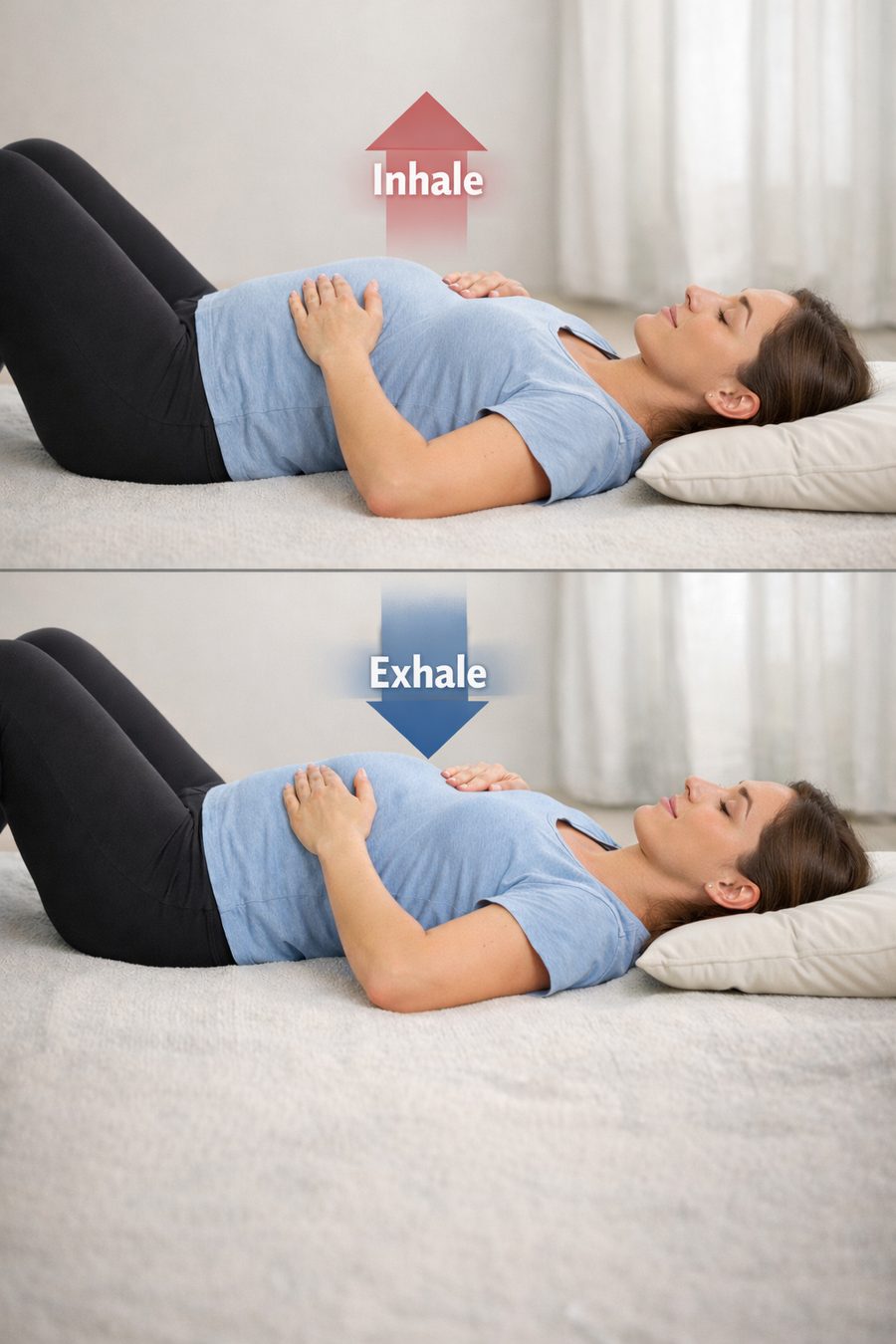
Breathing exercises were part of the supervised protocol that outperformed unsupervised home exercise, [4] and respiratory work is one of the four components of the multicomponent programmes the review supports. [5]
What a course of treatment looks like
In the acute phase, in hospital, alongside the medical team: positioning, joint range, respiratory care, and early mobilisation as it becomes safe. Autonomic instability means blood pressure and heart rate are watched during any change of position. [1]
In the recovery phase, over months: progressive strengthening, standing and walking retraining, endurance work, and a plan for fatigue. The dose that the evidence points to — 45 to 60 minutes, three to four times a week, supervised and individualised, for at least 12 weeks [5] — is substantial, and is not what most people are actually offered.
In the chronic phase, sometimes for years: maintaining what was regained, and dealing with residual fatigue, weakness and pain. The trial evidence suggests that supervision continues to add something at this stage rather than becoming unnecessary. [4]
Fatigue deserves separate mention because the guideline is honest that medicine has no specific treatment for it. [1] That does not mean nothing helps; it means the management is behavioural and graded rather than pharmacological, and it should be planned rather than left to improvisation.
Where weakness follows a stroke rather than a nerve illness, see stroke rehabilitation. Where the problem is spinal cord rather than peripheral nerve, see spinal cord injury rehabilitation. Swallowing difficulty during the acute illness is covered under dysphagia.
What the evidence supports — and what it does not
Supported
- Early immunoglobulin or plasma exchange for those unable to walk unaided. [1]
- Supervised, individualised exercise over unsupervised home exercise for strength, fatigue and quality of life in the chronic phase. [4]
- Multicomponent programmes combining resistance, aerobic, balance and respiratory work. [5]
- Using mEGOS and mEGRIS to estimate outcome and ventilation risk. [1]
Not supported
- Corticosteroids. Recommended against. [1]
- A second course of immunoglobulin in patients with a poor prognosis. [1]
- Plasma exchange followed immediately by immunoglobulin. [1]
- Any specific treatment for fatigue. None is recommended. [1]
- Confident claims about the best rehabilitation programme. Three randomised trials in the whole literature, and no definite conclusions possible. [7]
How certain is this?
Evidence grade: Low.
The grade describes the rehabilitation evidence. The acute medical pathway rests on a GRADE-based guideline from the European Academy of Neurology and the Peripheral Nerve Society, built from 14 structured clinical questions, [1] and is far more secure than anything on this page about exercise.
The rehabilitation literature is thin in an unusual way: not contested, just small. The most recent systematic review found 13 articles and 173 participants in total, drawn from study designs that included case reports and single-case designs, and the authors state plainly that their conclusions come from heterogeneous designs. [5] The randomised trial with the clearest result had 16 participants and did not reach significance on its own primary outcome. [4] A review restricted to randomised trials found three, and concluded that definite conclusions could not be extrapolated. [7]
This is what an under-researched condition looks like, and it is worth saying so directly rather than dressing three small trials in the language of certainty. The principles being applied — progressive, supervised, multicomponent training — are borrowed from better-studied conditions and are reasonable. They are not proven here.
One further limitation applies to almost everything above: these trials were conducted in settings with rehabilitation services available. The Lancet seminar notes geographical variation in the syndrome including insufficient access to immunotherapy in low-income countries, [3] and the primer names affordable treatment in low-income and middle-income countries as a major challenge for the future. [2] If the immunotherapy is not reliably available, a discussion about the optimal exercise dose is a long way down the list.
What to expect
Most people improve substantially, and the improvement continues for months. That is the central and reassuring fact.
But recovery is often incomplete. Around 20% of patients who received treatment are unable to walk after six months, and around 5% die as a consequence of the illness. [2] Those figures are worth stating because the common summary — "most people make a full recovery" — sets an expectation that a substantial minority will not meet.
Fatigue is the symptom most likely to persist, and it is the one for which medicine has no specific treatment to offer. [1] Planning for it from the start is more useful than waiting to see whether it resolves.
Timescales are long. The programmes associated with benefit ran for at least 12 weeks, [5] and the randomised trial followed people to 12 months and beyond the point where most people assume recovery has finished. [4] Progress that seems slow week to week can still be real over months.
Common questions
Will I recover completely?
Many people do, and most improve a great deal — but not everyone. About 20% of treated patients are still unable to walk at six months, and about 5% die as a consequence of the illness. [2] Prognostic scores exist for exactly this reason: the guideline advises using the modified Erasmus GBS outcome score to estimate outcome for an individual. [1] Ask your neurologist where you sit rather than relying on the average.
Should I be pushing myself, or resting?
Neither extreme. The evidence supports supervised, individualised, progressive training rather than either rest or maximal effort. In the randomised trial, 60-minute supervised sessions two to three times weekly for 12 weeks produced better strength, fatigue and quality-of-life outcomes than a prescribed 30-minute home programme at the same frequency. [4] Supervision was the variable that differed — which suggests progression and adjustment are doing the work.
Why am I still exhausted a year later?
Because fatigue is the characteristic long-term symptom of this illness, and it is not proportional to how weak you are. It is also the one the guideline is most candid about: no specific treatment is recommended for it. [1] What the rehabilitation literature associates with improvement is multicomponent exercise programmes, [5][6] delivered at enough dose and with supervision. [4] Pacing and graded return matter more than any single intervention.
How much exercise, and for how long?
The pattern most consistently associated with benefit is supervised, individualised sessions of 45 to 60 minutes, three to four times a week, for at least 12 weeks. [5] That is a real commitment, and it is worth knowing the number so you can ask whether what you are being offered comes close to it.
Can it come back?
It is usually a single-episode illness. [2] If weakness continues to progress beyond eight weeks from onset, though, the diagnosis itself is reconsidered — that happens in around 5% of people initially diagnosed, and the alternative diagnosis is acute-onset chronic inflammatory demyelinating polyradiculoneuropathy, which is managed differently. [1] Any new progression should be reported to your neurologist rather than treated as a setback in rehabilitation.
Why is there so little research on rehabilitation for this?
Because it is rare, and because research effort has concentrated on the acute phase. One review put it directly: the focus has been on care in the acute phase and on improving survival rather than on long-term disability. [7] The whole exercise literature amounts to 13 studies and 173 participants. [5] Knowing that is more useful than being given false precision.
References
- van Doorn PA, Van den Bergh PYK, Hadden RDM, et al. European Academy of Neurology/Peripheral Nerve Society Guideline on diagnosis and treatment of Guillain-Barré syndrome. European Journal of Neurology. 2023 Dec;30(12):3646–3674. doi:10.1111/ene.16073 PMID 37814552 Clinical practice guideline
- Leonhard SE, Papri N, Querol L, et al. Guillain-Barré syndrome. Nature Reviews Disease Primers. 2024 Dec 19;10(1):97. doi:10.1038/s41572-024-00580-4 PMID 39702645 Primer
- Shahrizaila N, Lehmann HC, Kuwabara S. Guillain-Barré syndrome. The Lancet. 2021 Mar 27;397(10280):1214–1228. doi:10.1016/S0140-6736(21)00517-1 PMID 33647239 Seminar
- Shah N, Shrivastava M, Kumar S, et al. Supervised, individualised exercise reduces fatigue and improves strength and quality of life more than unsupervised home exercise in people with chronic Guillain-Barré syndrome: a randomised trial. Journal of Physiotherapy. 2022 Apr;68(2):123–129. doi:10.1016/j.jphys.2022.03.007 PMID 35396175 Randomised controlled trial
- De León-Muñoz A, Ávila-Gandía V, Andreu-Caravaca L. Impact of Physical Exercise Programs on Fatigue and Functional Capacity in People With Guillain-Barré Syndrome and Chronic Inflammatory Demyelinating Polyneuropathy: A Systematic Review. Archives of Physical Medicine and Rehabilitation. 2026 May;107(5):1067–1078. doi:10.1016/j.apmr.2025.09.013 PMID 41038424 Systematic review
- Kiper P, Chevrot M, Godart J, et al. Physical Exercise in Guillain-Barré Syndrome: A Scoping Review. Journal of Clinical Medicine. 2025 Apr 12;14(8):. doi:10.3390/jcm14082655 PMID 40283485 Scoping review
- Sulli S, Scala L, Berardi A, et al. The efficacy of rehabilitation in people with Guillain-Barrè syndrome: a systematic review of randomized controlled trials. Expert Review of Neurotherapeutics. 2021 Apr;21(4):455–461. doi:10.1080/14737175.2021.1890034 PMID 33567916 Systematic review of randomised controlled trials
About this guide
If you need assessment
This page explains. It does not diagnose.
New or spreading weakness is a medical emergency and belongs in hospital, not in an outpatient clinic. In the recovery phase, the programme has to be built from your own strength, breathing capacity and fatigue pattern, and progressed as the nerve repairs. Physiotherapist India publishes information and takes no bookings. Ask a qualified physiotherapist to examine your own case before acting on anything written here.