Condition guide · Neurological rehabilitation
Spinal Cord Injury Rehabilitation
Walking after spinal cord injury is trained in several different ways — treadmill, robot-assisted, overground. The evidence comparing them is more honest, and more limited, than the marketing around some of the equipment.
In plain words. A spinal cord injury interrupts the signals travelling between the brain and the parts of the body below the level of damage. Depending on how complete the injury is and where it occurred, that can mean anything from mild weakness to a complete loss of movement and sensation below that point.
Where some walking function remains possible, a major part of rehabilitation is locomotor training — retraining the pattern of walking itself. It is delivered in several ways: on a treadmill with body-weight support, with a robotic exoskeleton assisting the legs, or overground with a therapist. A reasonable question, given the cost and complexity of some of this equipment, is whether any one method is actually better than the others.
Key points
- No locomotor training approach was shown superior to any other for walking function after spinal cord injury. [1]
- Body-weight-supported treadmill training did not significantly increase walking velocity (0.03 m/s, 95% CI −0.05 to 0.11) or walking capacity, compared with other rehabilitation. [1]
- In one study, robotic-assisted training produced reduced walking capacity compared with other intervention — a finding the reviewers flag as needing further investigation, not a settled result. [1]
- No differences in adverse events or drop-outs were found between approaches. [1]
- The review's own conclusion: there is insufficient evidence to conclude that any one locomotor training strategy improves walking function more than another. [1]
- This is about which method of training works best, not about whether rehabilitation itself is worthwhile.
What is actually happening
The spinal cord carries signals between the brain and the rest of the body. Injury — from trauma, or from non-traumatic causes such as infection, tumour or reduced blood supply — disrupts that pathway at the level where it occurred. The severity ranges from incomplete injuries, where some signal still gets through, to complete injuries, where none does.
Where the injury is incomplete and some capacity for walking-related movement remains, that capacity can often be improved with intensive, repetitive practice of the walking pattern — a principle grounded in the nervous system's ability to adapt and reorganise with use, sometimes called neuroplasticity. The open question this evidence addresses is not whether practising walking helps, but which specific way of delivering that practice produces the best result.
What it feels like
- Weakness or paralysis below the level of injury, varying from partial to complete.
- Altered or absent sensation below that level.
- Changes in muscle tone — sometimes floppy, sometimes stiff and spastic, depending on the type and stage of injury.
- Bladder, bowel and sexual function are commonly affected and are a central part of rehabilitation in their own right.
- Autonomic changes affecting blood pressure, temperature regulation and sweating, particularly in higher injuries.
How it is diagnosed
Spinal cord injury is diagnosed and classified by a specialist medical team, typically using a standardised neurological examination that establishes the level and completeness of the injury, supported by imaging. That classification drives the whole rehabilitation plan, including whether walking-focused training is an appropriate goal at all.
How physiotherapy and rehabilitation help
Rehabilitation after spinal cord injury is broad — strength, respiratory function, transfers, wheelchair skills, skin care, bladder and bowel management, and, where walking function is a realistic goal, locomotor training. This page focuses specifically on the locomotor training evidence, because that is where a genuine comparison between methods has been done.
The honest summary of that comparison is that intensive, repetitive practice of walking-related movement appears to be the active ingredient, and the specific delivery method — treadmill with support, robotic assistance, or overground — has not been shown to matter more than the others. [1] That is a meaningfully different message from marketing that presents a particular piece of equipment as the superior option. The same pattern — practice volume matters more than the machine delivering it — shows up in stroke rehabilitation, and it is worth reading the two together.
What locomotor training involves
| Approach | What it is | Evidence |
|---|---|---|
| Body-weight-supported treadmill training | Walking on a treadmill with a harness supporting part of the body weight, often with therapists assisting leg movement. | No advantage shown Did not significantly increase walking velocity or capacity vs other rehabilitation [1] |
| Robotic-assisted locomotor training | A powered exoskeleton or device assists or drives the leg movement during walking practice. | Not shown superior; one signal of concern One study found reduced walking capacity vs other intervention — needs further research [1] |
| Overground walking practice | Practising walking on the ground, with therapist assistance and walking aids as needed. | Comparable to other approaches One of the comparators; no approach shown superior [1] |
| Intensive, repetitive practice generally | The common element across all delivery methods — frequent, task-specific movement practice. | Plausible active ingredient Consistent across methods that performed similarly; not isolated as its own arm in this review |
| Strength, transfers, wheelchair skills, respiratory care | The broader rehabilitation programme alongside any locomotor training. | Not covered by this review This page's evidence is specific to locomotor training methods |
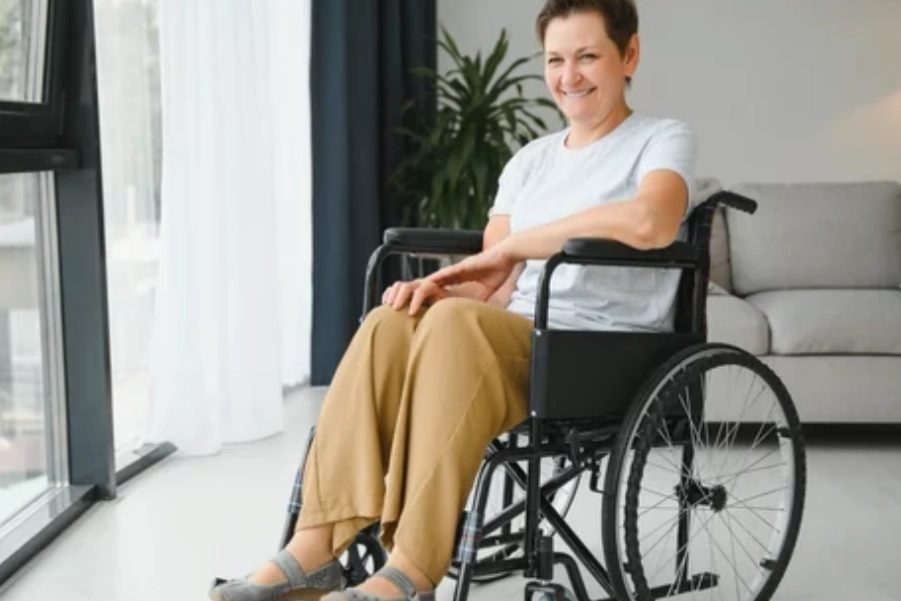
Rehabilitation after spinal cord injury is much broader than walking training: strength, transfers, wheelchair skills, respiratory care and sitting balance all matter, and sitting balance is where the recent evidence is strongest. [5]
What a course of treatment looks like
Assessment by the specialist team to establish the level and completeness of injury and realistic goals. Where walking-related training is appropriate, an intensive, structured programme of repetitive practice — the specific delivery method chosen based on what is available, what the person tolerates, and clinical judgement, since the evidence does not point to one method being superior. [1]
Rehabilitation after spinal cord injury typically runs over months, often starting in an inpatient setting and continuing in outpatient or community therapy, alongside the wider programme addressing strength, function and daily living skills.
What the evidence supports — and what it does not
Supported
- Locomotor training as part of rehabilitation where walking function is a realistic goal — the review compared methods against each other, not against no training at all.
- Choosing the method based on availability and individual fit rather than assuming one is superior, since none has been shown to be. [1]
- Safety across methods — no differences in adverse events or drop-outs were found. [1]
Not supported
- Claims that robotic-assisted training is superior — not shown, and one study raised a signal of possibly worse walking capacity that needs further research rather than dismissal. [1]
- Claims that treadmill training with body-weight support is superior — no significant increase in walking velocity or capacity over other rehabilitation. [1]
- Presenting expensive equipment as necessary for good outcomes — the review found no approach clearly ahead of the others.
How certain is this?
Evidence grade: Low. The comparison rests on five trials and 309 participants — a small evidence base for a condition this varied in severity and presentation. The review's own conclusion is that the results were inconclusive, and it explicitly calls for larger randomised trials, particularly of robotic-assisted training. [1]
What can be said with more confidence is the negative finding: none of the approaches tested has demonstrated a clear advantage over the others. That is a genuinely useful piece of information for decision-making, even though it cannot tell a specific person which method will suit them best. Spinal cord injury also varies enormously by level and completeness, and a review pooling different injury types will not capture every subgroup's response.
What to expect
Rehabilitation after spinal cord injury is measured in months, often starting soon after injury and continuing well beyond hospital discharge. The degree of recovery depends heavily on the completeness and level of the injury, and realistic goals are set individually by the specialist team rather than predicted from a general guide.
Where some walking capacity is present, intensive practice over time is the common thread across all the methods studied here — consistency and volume of practice appear to matter more than which specific piece of equipment delivers it.
Seek emergency assessment for
Go to an emergency department immediately for:
- New or worsening weakness, numbness or loss of bladder or bowel control after any neck or back injury.
- Any suspected new spinal injury — do not move the person unless trained to do so safely.
- In someone with an existing spinal cord injury: a sudden severe headache with high blood pressure, flushing and sweating above the injury level — this can be autonomic dysreflexia, a medical emergency.
- Signs of a blood clot — calf swelling, warmth or redness — which carries higher risk after spinal cord injury.
- Fever, or a new pressure sore that is worsening rapidly.
This list is not exhaustive. Spinal cord injury care is coordinated by a specialist medical team; this page describes rehabilitation evidence, not emergency or medical management.
Common questions
Is robotic training worth paying extra for?
The evidence does not support that it is superior. One study in the review actually found reduced walking capacity with robotic-assisted training compared with other intervention — a finding the reviewers say needs more research, not one that proves robotic training is harmful, but one that should temper claims of superiority. [1] No approach in this review was shown to beat the others.
Should I insist on treadmill training specifically?
Body-weight-supported treadmill training did not significantly increase walking velocity or walking capacity compared with other forms of rehabilitation. [1] It is a reasonable option, delivered as part of a good programme, but not a proven superior one.
Does this mean locomotor training doesn't work at all?
No — this review compared different training methods against each other, not training against no training. [1] It answers "which method is best", not "does training help", and it should not be read as evidence against rehabilitation.
How is the right approach chosen for me?
Since no method has been shown superior, the choice reasonably comes down to what is available, what suits your specific injury and goals, and clinical judgement — rather than a single evidence-based answer. [1]
What the most recent evidence adds
The Cochrane comparison above is from 2012 and reached no conclusion about which walking-training method is best. More recent work still has not produced a winner, but it has widened what can be said.
Activity-based interventions do produce measurable gains. A 2021 systematic review and meta-analysis of 31 studies found that transcranial magnetic stimulation improved walking speed and lower-extremity function, that robotic-assisted treadmill training improved lower-extremity function, and that functional electrical stimulation increased upper-extremity independence. [2] Note which intervention goes with which outcome — they are not interchangeable, and a clinic offering one of them for a goal it was not shown to help is overselling.
Novel is not the same as better. A 2024 multicentre randomised trial compared six weeks of walking adaptability training in a virtual-reality treadmill environment against the same 11 hours of conventional locomotor and strength training, in 41 people with incomplete injury. There was no significant difference in maximal walking speed between the groups. [3] Matching the dose is what makes that trial worth reading: it asks whether the technology adds anything, not whether training works.
Exoskeletons: safe, with a narrow demonstrated benefit. A 2023 randomised controlled trial of exoskeleton-based training in incomplete injury reported no major adverse events, low pain and fatigue scores, and a significant gain in walking independence on the WISCI-II (3.54 points in the trained group against 0.7 in controls). No differences were found between groups on the remaining outcomes. [4] In fairness to the reader: three of that study's authors are founding partners of the company that makes the device, which the paper discloses and which is worth weighing.
Sitting balance has clearer evidence behind it than walking does. For many people trunk control matters more for daily life than gait ever will. A 2025 meta-analysis of 17 studies and 432 people found exercise improved the Berg Balance Scale (mean difference 4.58, 95% CI 0.35 to 8.8), the Modified Functional Reach Test (5.29, 95% CI 4.16 to 6.42), and both static and dynamic sitting balance — with an added effect when the exercises enhanced sensory input. [5]
Interpreting the Berg Balance Scale figures on this page
Berg Balance Scale · Outcome measure
A 14-item observed balance scale scored 0 to 56. Rater reliability is excellent; the change you can defend in one patient is much larger than most people assume.
Full detail, psychometrics and 7 verified sources →
Not validated below a score of 20, and not a falls screen on its own.
References
- Mehrholz J, Kugler J, Pohl M. Locomotor training for walking after spinal cord injury. Cochrane Database of Systematic Reviews. 2012 Nov 14;11(11):CD006676. doi:10.1002/14651858.CD006676.pub3 PMID 23152239 Systematic review
- Duan R, Qu M, Yuan Y, et al. Clinical Benefit of Rehabilitation Training in Spinal Cord Injury: A Systematic Review and Meta-Analysis. Spine. 2021 Mar 15;46(6):E398–E410. doi:10.1097/BRS.0000000000003789 PMID 33620185 Systematic review and meta-analysis
- Zwijgers E, van Dijsseldonk RB, Vos-van der Hulst M, et al. Efficacy of Walking Adaptability Training on Walking Capacity in Ambulatory People With Motor Incomplete Spinal Cord Injury: A Multicenter Pragmatic Randomized Controlled Trial. Neurorehabilitation and Neural Repair. 2024 Jun;38(6):413–424. doi:10.1177/15459683241248088 PMID 38661122 Randomised controlled trial
- Gil-Agudo Á, Megía-García Á, Pons JL, et al. Exoskeleton-based training improves walking independence in incomplete spinal cord injury patients: results from a randomized controlled trial. Journal of NeuroEngineering and Rehabilitation. 2023 Mar 24;20(1):36. doi:10.1186/s12984-023-01158-z PMID 36964574 Randomised controlled trial
- Okawara H, Sawada T, Onuki S, et al. Exercise therapy can effectively improve trunk performance and sitting balance in spinal cord injury: a systematic review and meta-analysis. Neurological Sciences. 2025 Apr;46(4):1581–1597. doi:10.1007/s10072-024-07960-4 PMID 39739273 Systematic review and meta-analysis
About this guide
If you need assessment
This page explains. It does not diagnose.
Spinal cord injury is classified and medically managed by a specialist team, and the appropriateness of walking-focused rehabilitation depends on that classification. Physiotherapist India publishes information and takes no bookings. Ask a qualified physiotherapist to examine your own case before acting on anything written here.